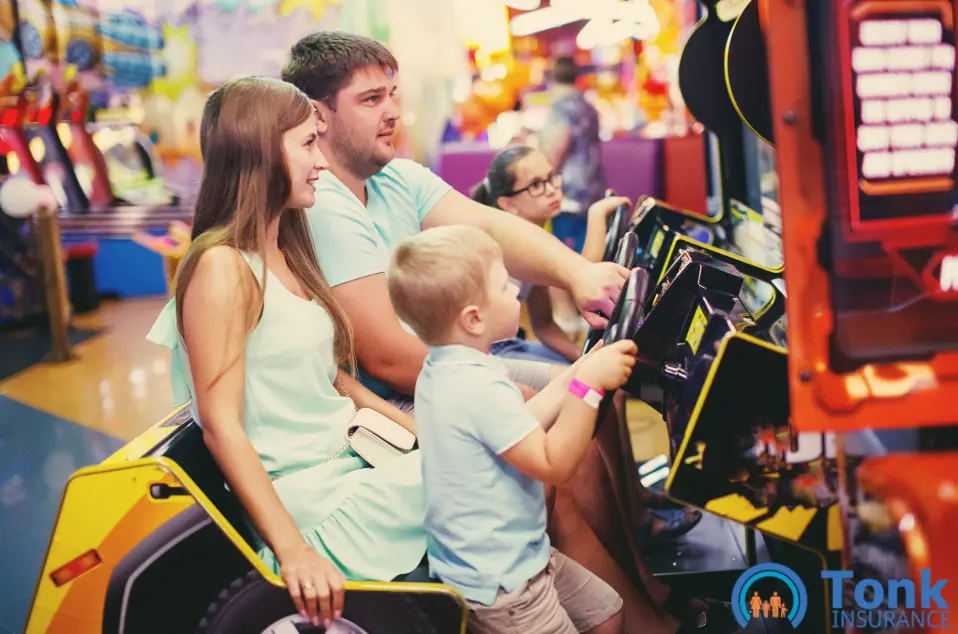
Are you searching for arcade insurance to protect your games, your prizes and your customers? A busy floor brings accidents and breakdowns.
Most arcade operators pay roughly $300 to $800 a year for $1 million in general liability. A complete program runs $1,000 to $7,500 once you add property, equipment breakdown and workers compensation. Insureon notes that a small retro arcade pays far less than a family fun center with mini golf.
The fact most operators miss: standard commercial property insurance excludes mechanical breakdown and electrical arcing. So a cabinet that dies of its own power supply is not a property claim. It is an equipment breakdown claim, and that is a separate coverage you must ask for.
What arcade insurance covers:
- Customer injuries on your floor and the legal costs that follow
- Fire, theft and vandalism damage to cabinets and the building
- Mechanical and electrical failure of your machines
- Lost income while you are closed for repairs
- Employee injuries, and data breaches on card payments
Why Is Arcade Insurance Important?
General business insurance might not be enough to cover the specific needs of your arcade. Most arcade owners need three specialized coverages. Those are equipment insurance, injury liability insurance and prize inventory insurance.
Specialized equipment insurance covers damage to expensive arcade games and equipment. Unlike general business insurance, this policy protects your machines against malfunctions and other issues that disrupt trading.
Injury liability insurance protects your business against claims resulting from injuries caused by malfunctioning equipment or accidents within the premises. For example, an interactive game such as VR gaming can potentially cause injury, which this type of insurance will cover.
Another very specialized insurance is prize inventory insurance. This coverage protects your prize inventory against loss or damage, so you can keep attracting and rewarding customers.
Associated Risks with Arcade Insurance
An arcade is a high-interaction space full of powered equipment and children moving quickly. The claims that actually arrive cluster in four places. Those are slips on a crowded floor, injuries from a faulty cabinet, machine failure that takes a game offline, and prize theft.
Commercial landlords and mall operators commonly require at least $1 million per occurrence before you open. They also require the landlord as an additional insured. That endorsement, evidenced on a certificate of insurance, is what the property manager checks.
Read your lease before you choose a limit, because the number in the lease is the floor. Buying under it puts the lease in default rather than saving you money. The same logic applies across public-facing venues, from fire performer insurance to bounce house insurance. The venue sets the limit, not the operator.
What Regulators Require
Many operators assume a state amusement ride permit applies to them. In California it does not. The Department of Industrial Relations’ permanent amusement ride safety orders (Title 8, section 344.5) expressly exclude arcades and indoor interactive arcade games. They also exclude bowling alleys, trampolines and inflatable rides. Coin-operated devices fall outside the definition.
What does apply is local. Cities and states license redemption and claw machines as amusement devices. Per-machine fees commonly run $50 to $200 a year, and some jurisdictions add periodic inspection. Verify at your city and county, not with the state ride unit.
A machine paying cash, or running mostly on chance, can be reclassified as gambling. That is a licensing problem rather than an insurance one.
Key Coverages for Arcade Insurance
Arcade insurance goes beyond general business insurance, addressing the unique risks and liabilities that arcade and amusement businesses face. This specialized coverage is essential to ensure that your arcade is adequately protected from potential financial losses.
Property Insurance
Property insurance provides coverage for your physical assets, including arcade machines, equipment, and the building itself. This insurance protects against various risks such as fire, theft, and vandalism. For example, a fire may damage your machines, or a thief may steal equipment. Property insurance then helps cover repair or replacement costs.
Property coverage answers external causes: fire, theft, wind, vandalism. It does not answer internal failure. Standard property forms exclude mechanical breakdown and artificially generated electrical current. So motor burnout, a short circuit or a power surge falls to equipment breakdown instead.
For a floor of cabinets running long hours, that is the common loss. Yet it is the line most often dropped to save a few hundred dollars.
Liability Insurance
Liability insurance offers protection against legal claims arising from injuries or damages that occur on your premises. This is particularly important for arcades, which are high-interaction environments where accidents can happen.
A customer may be hurt playing a game, or your equipment may damage someone else’s property. Liability insurance then covers medical expenses, legal fees and settlements.
Business Interruption Insurance
Business interruption insurance compensates for lost income due to temporary closures of your arcade. This coverage matters in natural disasters, power outages and other events that force a temporary closure.
For instance, a severe storm may damage your arcade. Business interruption insurance then covers the revenue you lose during repairs.
Workers’ Compensation
Workers’ compensation insurance covers medical expenses and lost wages for employees who get injured while working at your arcade. This type of insurance is often legally required and protects arcade owners from potential lawsuits related to workplace injuries.
For example, an employee may get hurt maintaining a machine. Workers’ compensation then covers the medical bills and part of the lost wages.
Cyber Insurance
Cyber insurance protects against data breaches and cyberattacks. Those matter more as arcades handle customer data and card payments. Someone may hack your systems and steal customer information. Cyber insurance then covers notification costs, credit monitoring and legal fees.
Specialized Insurance Coverages
Specialized insurance coverages for arcades include protection for valuable gaming equipment, prize inventory and business interruptions. These tailored coverages ensure comprehensive protection against the unique risks faced by arcade businesses.
Equipment
Specialized equipment coverage is designed specifically for arcade machines and other unique equipment. This ensures that all valuable assets are adequately protected. If someone damages or steals a high-tech machine, this insurance covers repair or replacement. That keeps your arcade trading without a serious financial setback.
Prize Inventory
Prize inventory insurance is another essential coverage needed for arcades that offer prizes as part of their gaming experience. This specialized coverage protects your prize inventory against risks such as theft, damage, and loss. Arcades invest heavily in attractive prizes to draw customers, so cover those assets properly.
Business Interruptions
Business interruption insurance is a critical coverage for arcades to ensure financial stability during unexpected closures. It protects your income against natural disasters, fires and other incidents that halt trading.
Amusement arcade insurance should cover three things. Those are specialized equipment, liability for customer injuries, and business interruption. Ask your insurance agent about comprehensive coverage to address these unique risks specific to arcades.
Finally, dry arcade insurance coverage is designed for amusement arcades that do not include water-based activities such as swimming or water slides. It focuses on the risks of “dry” entertainment. That means video games, pinball machines, virtual reality and similar amusements.
Arcade Insurance Cost Breakdown
In the US, arcade owners generally spend $1,000 to $10,000 a year on insurance. The range depends on the size and nature of the operation. Four things drive the cost: machine count, arcade size, employee count and the coverages you need.
Arcade Size
| Small Arcade | Medium Arcade | Large Arcade | |
| Number of Machines | 5-20 machines | 21-50 machines | 51+ machines |
| General Liability Cost | $500-$1,000 annually | $1,000-$2,000 annually | $2,000+ annually |
| Property Insurance Cost | $400-$1,000 annually | $1,000-$2,500 annually | $2,500-$5,000 annually |
| Equipment Insurance Cost | 2-4% of equipment value | 2-4% of equipment value | 2-4% of equipment value |
| Business Interruption Cost | $300-$700 annually | $700-$1,500 annually | $1,500-$3,000 annually |
| Cyber Insurance Cost | $150-$500 annually | $500-$1,000 annually | $1,000-$2,000 annually |
| Workers’ Compensation Cost | $500-$1,200 annually | $1,200-$2,500 annually | $2,500-$5,000 annually |
| Comprehensive Package Cost | $1,000-$3,000 annually | $3,000-$6,000 annually | $6,000-$10,000+ annually |
Choosing the Right Arcade Insurance Policy
First, understand your needs. Review the coverage options specific to arcade businesses and see how they fit your operation. Consider your games and equipment, the value of your property and inventory, your payroll, and your customer traffic.
Next, research providers closely. Check financial strength and customer support ratings.
When you speak with a provider, ask how customizable the policy is. Check where the limits and exclusions sit, and whether equipment breakdown is included. Confirm they can issue certificates with an additional insured endorsement quickly, because that is what your landlord will ask for.
Compare at least three quotes on the same limits, because a cheaper premium on a lower limit proves nothing.
Tonk Insurance is an independent brokerage, so we compare arcade programs across carriers rather than selling one. Contact our insurance team to talk through your floor plan, machine count and lease requirements.
Another suggestion is to consult with industry experts through various forums and professional associations. Additionally, use tips for comparing policies and getting quotes to ensure you find the best option for your arcade.
What I See Arcade Owners Get Wrong
Here is the thing nobody tells you. Your property policy is built for the loss you will probably never have. Fire, theft, wind, vandalism: those are the covered causes, and they are the rare ones.
But an arcade cabinet actually dies of a burned-out motor, a short circuit or a surge. Standard property forms exclude mechanical breakdown and electrical current outright. Insureon, The Hartford and Nationwide all treat equipment breakdown as a separate form for exactly this reason.
So the pattern I notice is an operator running powered cabinets twelve hours a day. They are insured beautifully against a fire, and not at all against a Tuesday.
Equipment breakdown is usually the first line dropped when trimming a quote. Yet it is the one matched to how the equipment really fails. Insure the cabinets against their actual failure mode, not the dramatic one.
Read The Lease Before You Choose A Limit
The second thing worth saying plainly: read your lease before you choose a limit. Landlords and mall operators commonly set $1 million per occurrence, and require naming as an additional insured. That number is a floor, not a negotiating position.
Buying underneath it does not save money, it puts the lease in default. The property manager checks the endorsement on the certificate, not the policy. So confirm your broker can issue it quickly.
Where operators waste the most worry is regulation, and usually in the wrong direction. California excludes arcades and coin-operated games from its permanent amusement ride safety orders. So the state permit regime people expect generally does not attach.
What does attach is local: business licensing, per-machine amusement device fees, and whatever your lease demands. Verify those at the city and county, not with the state ride unit.
Frequently Asked Questions about Arcade Insurance
How much does arcade insurance cost?
Arcade operators commonly pay $300 to $800 a year for $1 million in general liability coverage. A complete program that adds property, equipment breakdown, business interruption and workers compensation typically runs $1,000 to $7,500 a year. Your machine count, square footage, payroll and claims history drive where you land in that range.
What insurance is required to open an arcade?
The insurance required to open an arcade starts with general liability, commonly at $1 million per occurrence with the landlord named as an additional insured on your lease. Workers compensation is legally required in most states once you have employees. Property and equipment breakdown are not mandated but protect the cabinets generating your revenue.
Does property insurance cover a broken arcade machine?
Property insurance usually does not cover a broken arcade machine, because standard commercial property forms exclude mechanical breakdown and electrical arcing. Those forms answer fire, theft and vandalism, not a burned-out motor or a power surge. Equipment breakdown coverage is the separate form responding to internal failure, and it matches how cabinets actually fail.
Do arcades need an amusement ride permit?
Arcades do not need an amusement ride permit in California, because Title 8 section 344.5 excludes arcades and indoor interactive arcade games from the permanent amusement ride safety orders. Coin-operated devices fall outside the definition entirely. Local business licensing and per-machine amusement device fees still apply, so verify with your city and county.
What is prize inventory insurance for an arcade?
Prize inventory insurance protects the plush toys, electronics and redemption merchandise you hold against theft, fire and water damage. Arcades often carry several thousand dollars of prizes on site, and a standard property limit set for equipment alone can leave that stock underinsured. Confirm your limit reflects peak season inventory.
Does arcade insurance cover injuries from a claw machine?
Arcade insurance does cover injuries from a claw machine through your general liability policy, which pays medical costs, legal defense and any settlement. Keeping maintenance and inspection records for each cabinet matters, because documented servicing is what defends the claim. Equipment breakdown handles the repair to the machine itself.
Who covers a birthday party held at my arcade?
Your general liability policy covers parties you host on your premises, because the injury happens on your floor and under your supervision. A client renting your space for a private event is different, and many operators require the renter to carry their own event coverage. Set that expectation in the booking agreement rather than after an incident.
How much of my revenue should arcade insurance cost?
Arcade insurance commonly runs a low single-digit share of revenue, with general liability alone near $300 to $800 a year. A program past ten percent of revenue is worth re-shopping. Check that your limits match what the lease actually requires, and confirm your payroll and machine count are current, because stale figures inflate a renewal.
Are stolen prizes and machines covered at replacement cost?
Stolen prizes and machines are covered at replacement cost only when the policy says so. Actual cash value pays a depreciated figure instead, so a cabinet costing $4,000 to replace may settle for a fraction of that once age is deducted. Ask for replacement cost in writing, and confirm your prize limit reflects peak season stock.
Conclusion
Making informed decisions about arcade insurance is crucial for long-term success. Assess your needs against your games and equipment, your property and inventory value, your staff count and your customer traffic. This helps you choose the right coverage to protect your business the best.
Contact us to get a free quote today.