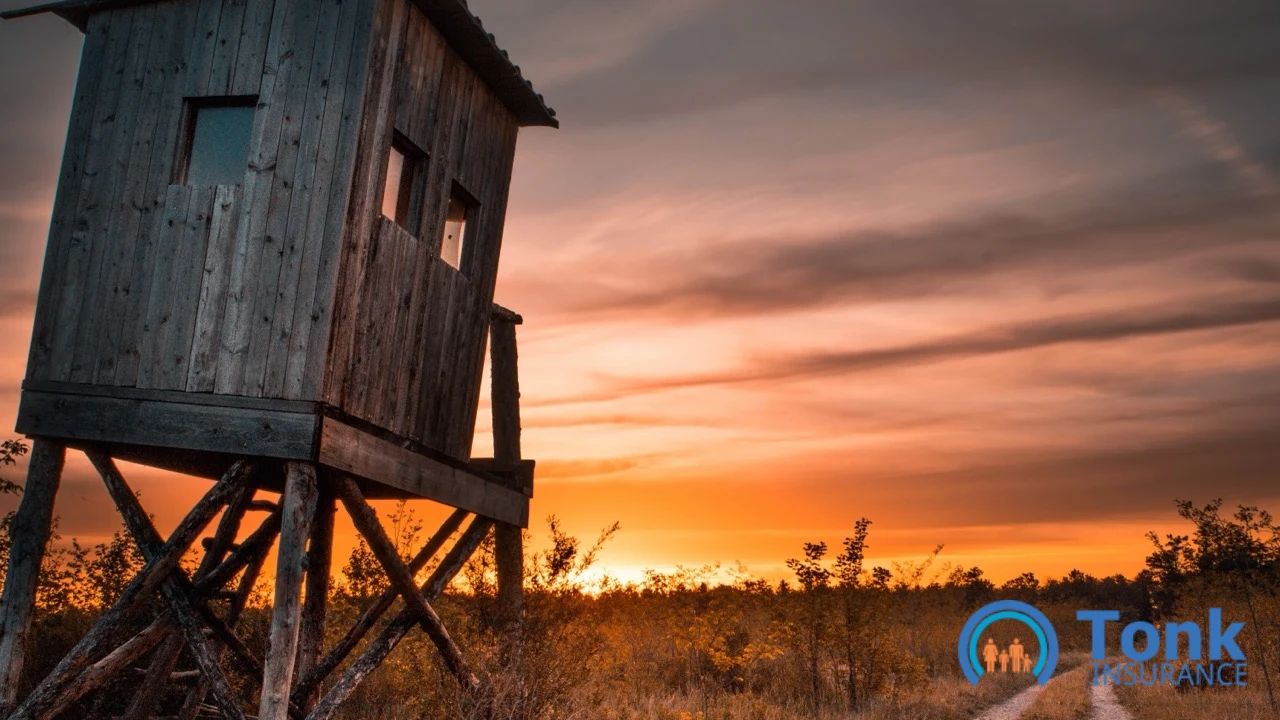
Are you searching for hunting lease insurance to protect your land, your club or your hunting rights from the liability that comes with a paid lease?
Your state shields you from liability when people hunt your land free. Take money, and the shield drops away. Cover for that gap starts near $260 a year, or $0.16 an acre, per the American Hunting Lease Association’s rate card.
Most policies carry $1,000,000 per claim and $2,000,000 in total, with no deductible. Iowa State University puts the legal shift plainly: charge a fee, and you owe a higher duty of care.
What hunting lease insurance covers:
- Member and guest liability: injuries to club members and their guests on the leased ground.
- Treestand and ATV accidents: the two loss drivers this class is built around.
- Damage to premises rented to you: fire damage to leased timber or structures.
- Medical payments: commonly $5,000, paid without proving fault.
- Landowner protection: as a named or additional insured, depending on the program.
This guide covers what the cover does, what it costs, how the owner is protected, and the questions hunters ask most.
—
Why Is Hunting Lease Insurance Important?
A paid lease changes your legal footing, not just your income. Every state has a recreational use law. These laws exist to get owners to open land for free. They do it by limiting what you owe anyone who hunts or fishes there.
Charging rent moves the hunter into a new legal class. Iowa State says a paying hunter becomes a business invitee. That class is owed the highest duty of care there is.
The law firm Plews Shadley Racher & Braun sees the same shift. Once money changes hands, you must take real care to keep that person safe. You must also look for hidden dangers and warn about what you find.
This rule varies by state, so check yours. A few states carve out an exception. Ohio, for one, lets owners take lease money and keep that legal shield. Never assume your state works like the one next door.
—
Associated Risks with Hunting Lease Insurance
The risks here concentrate in a few predictable places. The programs are priced around them.
- Treestand falls: the signature hunting injury, and often a bad one. Falls lead to back and joint claims that run long and cost a lot.
- ATV and UTV accidents: hunters move gear and game over rough ground, frequently after dark.
- Firearm and archery accidents: less frequent than falls, but severe when they happen.
- Fire: a loose campfire can burn leased timber. That is why damage to rented ground sits in these policies.
- Guest and trespasser exposure: the person who gets hurt is often not the person who signed.
The Landowner Alliance argues that $2,000,000 per claim is becoming the norm here. It points to legal and expert costs that eat up a $1,000,000 limit. It also cites severe injuries that top $1,000,000 in lifetime medical bills.
That group does not publish numbers behind the claim. So treat it as where the market is heading, not a settled figure.
—
Types of Hunting Lease Insurance Coverage
General Liability
The core of the policy. It pays when a member, guest or outsider is hurt on the leased ground and blames the club or the owner. Two programs, run by the National Deer Association and the Alabama Forest Owners Association, both list $1,000,000 per claim and $2,000,000 in total. Neither has a deductible.
Member to Member and Guest Liability
Most home policies rule out claims between people covered by the same policy. Lease programs add member to member cover on purpose. The person most likely to be hurt is another member of your own club.
Damage to Premises Rented to You
This pays for harm to the land or buildings you lease. Fire is the usual cause. One program gives the example of a loose campfire burning leased timber.
Medical Payments
A small no-fault benefit, usually $5,000. It pays doctor bills for a minor injury with no one admitting fault. That often stops a small event from turning into a claim.
Landowner Status: Named or Additional Insured
This one varies by program, and the gap matters. The National Deer Association adds the owner as an additional insured, free. The American Hunting Lease Association lists owners as a named insured instead. It sells that as a step up from additional insured status.
A named insured holds full rights under the policy. An additional insured holds narrower ones that hinge on the wording. Ask which applies before you compare prices. If the wording is unclear, talk to a broker.
—
Hunting Lease Insurance Cost
Cost turns on one question. Is this a club or lease policy, or a policy for a hunting business? Those are two products at two price points. Mixing their quotes is the top source of confusion.
| Coverage | Club or lease policy | Commercial hunting operation |
|---|---|---|
| General liability, $1M/$2M | $260 to $1,000 per year | About $1,236 per year |
| Per-acre rate, $1M tier | $0.16 per acre | Quoted individually |
| Per-acre rate, $2M tier | $0.26 per acre | Quoted individually |
| Medical payments | $5,000 included | Varies by policy |
| Deductible | None on major programs | $500 to $2,500 typical |
| Comprehensive package | $260 to $1,000 per year | $1,236 and up per year |
Costs current as of September 2026. Actual costs vary based on acreage, member count, state, hunting activities allowed, limits selected and claims history.
Club figures come from the American Hunting Lease Association’s rate card. Rollo Insurance puts Texas lease cover at $300 to $1,000 or more a year. The business figure is the average listed by Insuranks, a quote site.
Notice the per-acre spread. Going from a $1,000,000 limit to $2,000,000 costs ten cents an acre on that rate card. Price both before you rule out the higher one.
—
What Landowners Require for Hunting Lease Insurance
If you lease ground in, the owner sets the terms. Those terms are getting more alike across the board.
- A written lease with every owner. Big programs want one before they will issue a policy. Plews Shadley Racher & Braun call a signed lease the single best step for avoiding disputes.
- Proof the owner is on the policy. Either as a named insured or an additional insured, by program.
- A signed waiver from each hunter. A waiver shapes your defense, but it does not stop anyone from filing suit.
- Limits that match the lease. $1,000,000 per claim is the usual floor. More owners now ask for $2,000,000.
Two gaps catch people out. Paid guiding and outfitting are usually left out of club and lease programs. Sublet ground often does not qualify at all. Do you sublet part of your lease to recoup cost? Say so before you buy, because it can void the cover you thought you had.
—
How to Choose the Best Hunting Lease Insurance Provider
- Start with who is buying. A landowner leasing ground out and a club leasing it in have opposite exposures. Settle that before you compare a single price.
- Read the landowner line on the certificate. Named insured and additional insured are not the same protection. The cheaper program sometimes gives the landowner less.
- Price both limit tiers. On a per-acre policy the jump to $2,000,000 is one of the cheapest limit increases in small commercial insurance.
- Check the policy term. Some programs run a fixed year. At least one runs August 1 to July 31 without prorating a mid-year purchase.
- Confirm the exclusions match reality. Guiding, outfitting and subleasing are the usual gaps.
- Ask whether the policy defends you. Paying a claim and defending a lawsuit are different promises.
An independent broker can weigh programs across insurers instead of selling just one. Want your lease checked against the cover before the season starts? Request a quote.
A broker’s view on hunting lease insurance
Harminder Tonk’s take, Licensed Insurance Broker, License #0D97527
If you lease your land for hunting income, assume two shields fell away the day you cashed the first check. Your recreational use protection and your home liability both rest on the same fact, which is that nobody paid you. One fee strips both. Most owners find the second one only after a claim.
Sources treat these as separate topics. Law firms write about the statute. Insurers write about the policy. Nobody ties them to the one event that trips both, so tie them together yourself before the season opens.
The other thing worth your time is the certificate wording. A program sometimes costs less because the owner gets fewer rights. That only shows up when someone sues.
—
Safety Practices That Lower Insurance Costs
Treestand Protocols
Require a full-body harness and a lifeline on every stand. Ban stands in dead or damaged trees. Treestand falls drive most of the serious injuries here. A written stand rule is the best safety step a club can take.
Documentation and Screening
Keep a signed waiver and a current lease on file for every member and guest. Log who is on the land and when. Insurers here want that paperwork in hand before they quote.
Guest and Access Rules
Write down who may bring a guest, how many, and whether that guest may hunt alone. Unlisted hunters are a common lease breach and a common cover fight.
Hazard Marking
Walk the land and mark open wells, old footings, washouts and weak crossings. A paying hunter is a business invitee, so warning about hidden dangers is part of the duty you now owe.
—
Frequently Asked Questions about Hunting Lease Insurance
How much does hunting lease insurance cost?
Hunting lease insurance usually costs $260 to $1,000 a year for a club or lease policy at a $1,000,000 limit. The American Hunting Lease Association lists $260 a year for up to 499 acres, or $0.16 an acre. A hunting business pays far more. The quote site Insuranks puts that near $1,236 a year.
Do I need insurance for a hunting lease?
You need cover for a hunting lease in almost every paid deal. Charging a fee strips the legal shield most owners lean on. Iowa State confirms a paying hunter becomes a business invitee, which raises the care you owe. Many owners now want proof of cover before they sign.
Does homeowners insurance cover a hunting lease?
Home insurance usually does not cover a hunting lease. Taking lease income turns the use into a business one, not a personal one. Plews Shadley Racher & Braun note that home policies skip anything you are paid to do. Alfa Insurance warns that farm or home cover can leave gaps on leased land.
Should I require hunters to list me as an additional insured?
Owners should ask for additional insured status at the least, then see if the program offers more. That status gives you rights under the hunter’s policy. Some programs list owners as a named insured instead, which is broader. Check that the policy will defend you, not just pay.
Is a verbal hunting lease agreement enough?
A spoken lease is not enough, in law or in cover. Big programs want a written lease with each owner before they issue a policy. A handshake deal can leave you unable to buy cover at all. Plews Shadley Racher & Braun call a signed lease the best step for avoiding disputes.
Do hunters need to sign a release?
Hunters should sign a release, but know what it does. A waiver backs your defense and shows insurers a well-run setup, and most want them on file before they quote. It does not stop anyone from suing. Courts also differ by state on how firmly they hold these, above all for minors.
What happens if someone brings an unlisted guest?
An unlisted guest can spark both a cover fight and a lease breach. Most programs do extend guest liability. They expect guests to fit the rules set out in your lease and club terms. Write down who may bring a guest, and whether that guest may hunt alone. Then keep an access log.
What limits should a hunting lease policy carry?
A lease policy should carry at least $1,000,000 per claim and $2,000,000 in total. Two programs, from the National Deer Association and the Alabama Forest Owners Association, both list those limits. The Landowner Alliance argues $2,000,000 is becoming the norm. On per-acre pricing that step up costs about ten cents an acre.
Does the insurance need to be active before anyone enters the property?
Cover should be live before the first hunter steps on the ground. These policies pay only for events inside the policy term. A gap between signing the lease and starting the policy leaves that window bare. Note that one major program runs a fixed August 1 to July 31 year, with no refund for a mid-year start.
What is the difference between hunting lease and vacant land insurance?
Hunting lease insurance covers claims from hunting activity and protects the owner and the hunters alike. Vacant land insurance protects only the owner, and only against their own negligence. Whitetail Properties notes that vacant land cover is unlikely to pay for an injury that is no fault of the owner. Take lease money, and you want the lease policy.
Does hunting lease insurance cover bowhunting and crossbows?
Hunting lease policies are written around the activity and the lease, not the weapon, so bow, crossbow and muzzleloader hunting are generally covered alongside firearms. XINSURANCE states it insures hunters who use bows and arrows as well as guns. Method can still move your premium: Rollo Insurance lists type of hunting as a rating factor.
—
Conclusion
Hunting lease insurance is cheap next to what it protects. The reason to buy it is narrower than most people think, because it is not really about hunting accidents.
It is about what taking lease money does to your legal standing. That one fee strips a protection you may not know you had. At the same time, it pushes the risk outside your home policy.
Settle who is buying. Read the owner line on the certificate. Get the lease in writing, and price both limits. Those four steps head off most of what goes wrong here.
If you lease land for hunting, or your club needs coverage before the season opens, contact Tonk Insurance for a comparison across programs. For related outdoor coverage, see our guides to archery insurance, kayaking insurance and firearms instructor insurance.
—